How Social Media Affects Teens
Has social media helped or hurt teens? Like technology in general, social media has an upside and downside. But frequent use of social media among teenagers has many negative consequences. Including cyberbullying, negative self-image, and increased teen depression.
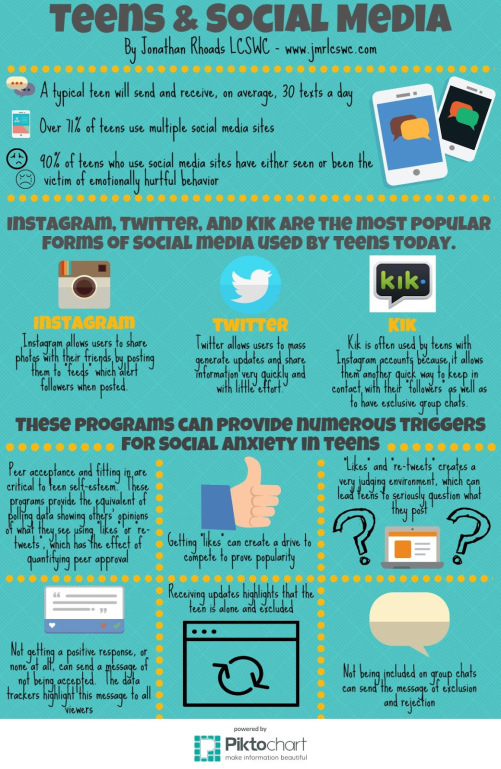
Does social media make teens more anxious and depressed? Many experts believe that the constant over-stimulation of social networking shifts the nervous system into fight-or-flight mode. As a result, this makes disorders such as ADHD, teen depression, and teen anxiety worse. As shown in the info-graphic, 90 percent of teens who use social media sites have either seen or been the victim of emotionally hurtful behavior. Further contributing to the negative effect of social media on teenagers.
Teen Depression
One of the most devastating effects is increased teen depression being linked to technology use. Surveys show that teen depressive symptoms and suicide rates increased between 2010 to 2015. Knowing that social media has continued to significantly grow since then, these symptoms and rates have most definitely continued to rise. As said in the video, technology can cause lack of sleep, which further can cause depressed moods, moodiness, and irritability. https://www.franciscanhealth.org/news-and-events/news/social-media-affecting-your-children-happiness
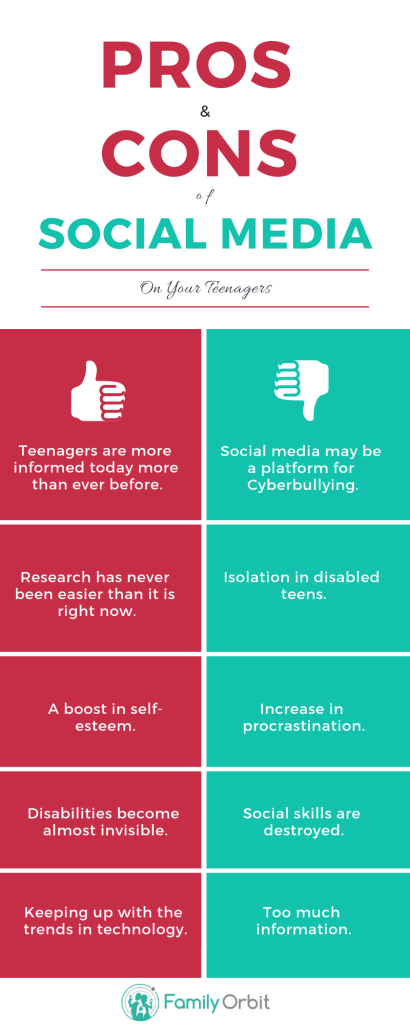
On the other hand, social media helps people who are socially isolated or shy connect with others. Surveys show that 25 percent of teens say they feel less shy, 28 percent feel more outgoing, and 20 percent feel more confident(53 percent of those identified as shy). https://socialnetworking.procon.org/
Teenagers who are “less socially adept” report that social media gives them a place to make friends and typically quiet students feel more comfortable being vocal through a social media platform in class. However, the cause of this is social media being a handicap for young people who would rather take the easy route instead of taking the chance on a real life experience. Furthermore, these teenagers are “shy” and “socially isolated” because they grew up with a piece of technology every day and they don’t know the difference between the two.
Social Media & Social Comparison
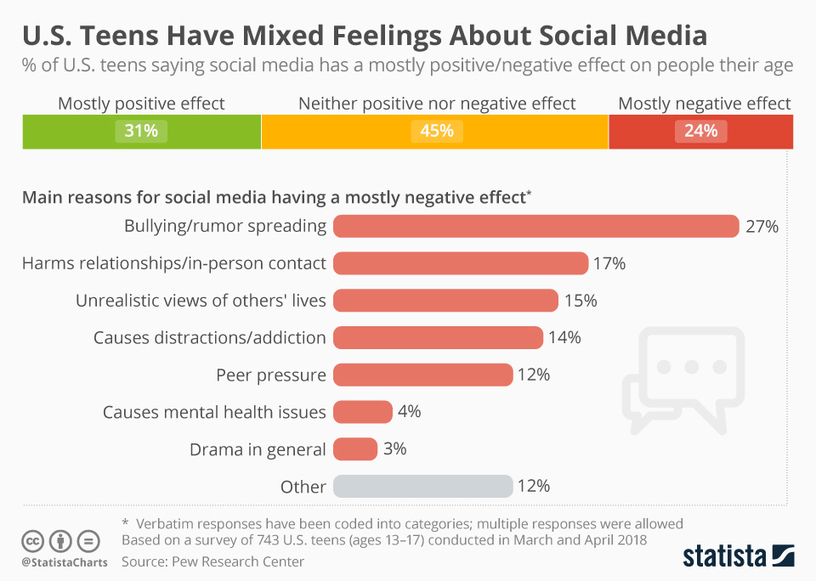
Another one of the most common themes related to technology use is comparisons. Teenagers on social media spend much of their time observing the lives and images of their peers. Therefore, this leads to constant comparisons. And this can damage self-esteem and body image. Moreover, it can lead to depression. One of the most evident examples is comparisons among teen girls.
According to a Pew Research Center report on the effect of social media on teenagers, “43 percent of teenagers say they feel pressure to only post content on social media that makes them look good to others. Furthermore, 26 percent of teens say these sites make them feel worse about their own life.” https://www.pewresearch.org/internet/2018/05/31/teens-social-media-technology-2018/
On the other hand, social media provides a forum for teen identity development. Allows teens to practice skills related to identity development. These include, self-preservation, self-disclosure, voicing opinions, beliefs, and preferences. However, these skills are not real experiences if it’s through a screen. Because these teens aren’t actually utilizing these skills to their true definitions.
Facilitates Cyberbullying
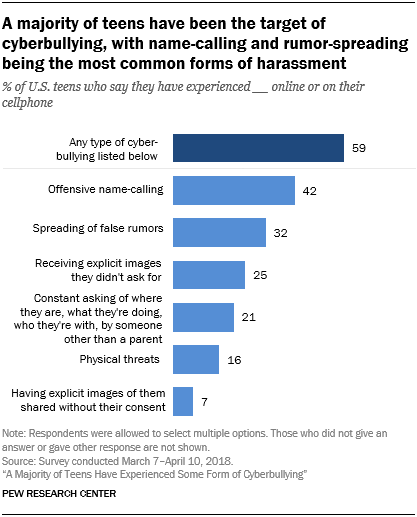
The high percentage of teenagers experiencing cyberbullying is a scary sight for our younger generation.
Bullying has long been an unpleasant and challenging aspect of adolescent life. But the rise of social media has transformed where, when and how bullying takes place. A new Pew Research Center survey finds that “59% of U.S. teens have personally experienced at least one of six types of abusive online behaviors.” Furthermore, middle school children who are victims of cyberbullying are almost twice as likely to attempt suicide.
Some people may argue that social media empowers individuals to make social change and do social good. An example of this is in Hillsborough, CA, where “freshman varsity soccer goalie Daniel Cui was blamed for and bullied about a losing season until over 100 of his teammates and classmates changed their Facebook profile photos to one of Cui making a save, silencing the bullies and building Cui’s confidence.” While this point may be true, plenty of evidence shows the outweighing negative effects of social media. Even within this story, bullying was the cause of the incident, further backing up the negative effect of social media on teenagers.
Social Media Negatively Affects Teens
Social media is and will continue to be harmful to our teens, unless something is done about it. Effects such as teen depression, self-comparisons, cyberbullying, are just a few reasons to why social media negatively effects teenagers.
Byline
Luke Richardson, 16 year old sophomore, at Franklin Simpson High School. An avid social media user. Constantly experiencing and seeing the effects of social media on a day to day basis. Follow me Instagram @lukerichardson.3

 Luke's Blog