Be yourself; Everyone else is already taken.
— Oscar Wilde.
This is the first post on my new blog. I’m just getting this new blog going, so stay tuned for more. Subscribe below to get notified when I post new updates.
Be yourself; Everyone else is already taken.
— Oscar Wilde.
This is the first post on my new blog. I’m just getting this new blog going, so stay tuned for more. Subscribe below to get notified when I post new updates.
F. Scott Fitzgerald’s, “The Great Gatsby“, is an incredibly famed novel. Being so, many thoughts and opinions are sprung about its origin and its connection to its author’s life. It is important to notice that there are many similarities between the author, F. Scott Fitzgerald, and his work, “The Great Gatsby.” Most importantly, the story takes place in the 1920’s, the time period which Fitzgerald lived through. Just as it is the most crucial part of the setting in Gatsby, it is also a crucial time in Fitzgerald’s life. Furthermore, it is critical to evaluate the life of F. Scott Fitzgerald to ultimately realize the huge influence of his own life on his novel.

In the novel, Fitzgerald put pieces of himself into two of the most prominent characters in the book, Nick and Gatsby. To start, Fitzgerald gave Nick similar background that matched his. They were both from Minnesota. “My family have been prominent, well-to-do people in this Middle Western city for three generations.” (p.3) From Minnesota, both Nick and Fitzgerald’s family’s sent them to ivy league schools. Fitzgerald attended Princeton University and Nick attended Yale University. “I was rather literary in college- one year I wrote a series of very solemn and obvious editorials for the Yale News.” (p.4)

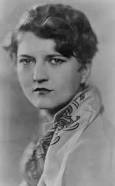
With Gatsby, they both joined the military and both fell in love at the location they were stationed. Gatsby fell in love with Daisy Buchanan and Fitzgerald fell in love with a woman by the name of Zelda. Throughout the novel, Gatsby constantly tries to impress Daisy, mainly by throwing parties. “Anyhow, he gives large parties.” (p.49) This quote is from Jordan Baker as she explains how Gatsby normally throws parties. Zelda wanted a rich and successful man, so Fitzgerald did the same as Gatsby.
Another connection can be made to Tom Buchanan. Having played football in high school, Fitzgerald tried out for the team when he arrived at Princeton. Even though he was cut, which was the complete opposite of what Tom accomplished in football, he did share the sport of football with him. In the novel, it says, “Her husband, among various physical accomplishments, had been one of the most powerful ends that ever played football at New Haven.” (p.6)

Lastly, even though Fitzgerald came from a rather wealthy family, it still was not enough compared to most of his peers. Such as, many of his fellow college students and his lover Zelda. This is a connection to Nick in the novel. Nick also comes from a rather wealthy family, however compared to Nick’s newfound friends, he is not of the same class. This is a highlight of the novel, specifically as Nick being the narrator and being able to see both sides of life (the high and middle class). In the novel, Nick says, “I was within and without, simultaneously enchanted and repelled by the inexhaustible variety of life.” (p.35) This quote embodies both Nick’s and Fitzgerald’s lives. Being in the “middle” of everything, mostly when it came to class and status.
Furthermore, this is just another example of the huge influence of Fitzgerald’s life on his novel. This entire novel is filled with real-life connections from Fitzgerald’s life that he implemented into his story. This is why it is critical to evaluate the life of F. Scott Fitzgerald to ultimately realize the huge influence of his own life on his novel.
Has social media helped or hurt teens? Like technology in general, social media has an upside and downside. But frequent use of social media among teenagers has many negative consequences. Including cyberbullying, negative self-image, and increased teen depression.
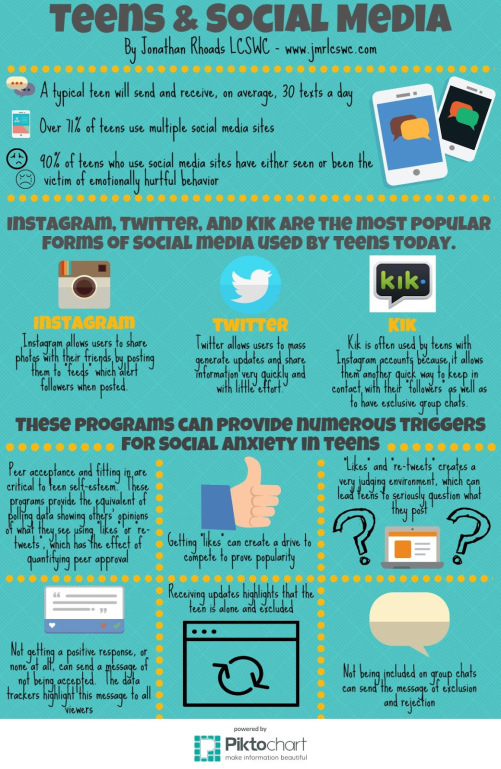
Does social media make teens more anxious and depressed? Many experts believe that the constant over-stimulation of social networking shifts the nervous system into fight-or-flight mode. As a result, this makes disorders such as ADHD, teen depression, and teen anxiety worse. As shown in the info-graphic, 90 percent of teens who use social media sites have either seen or been the victim of emotionally hurtful behavior. Further contributing to the negative effect of social media on teenagers.
One of the most devastating effects is increased teen depression being linked to technology use. Surveys show that teen depressive symptoms and suicide rates increased between 2010 to 2015. Knowing that social media has continued to significantly grow since then, these symptoms and rates have most definitely continued to rise. As said in the video, technology can cause lack of sleep, which further can cause depressed moods, moodiness, and irritability. https://www.franciscanhealth.org/news-and-events/news/social-media-affecting-your-children-happiness
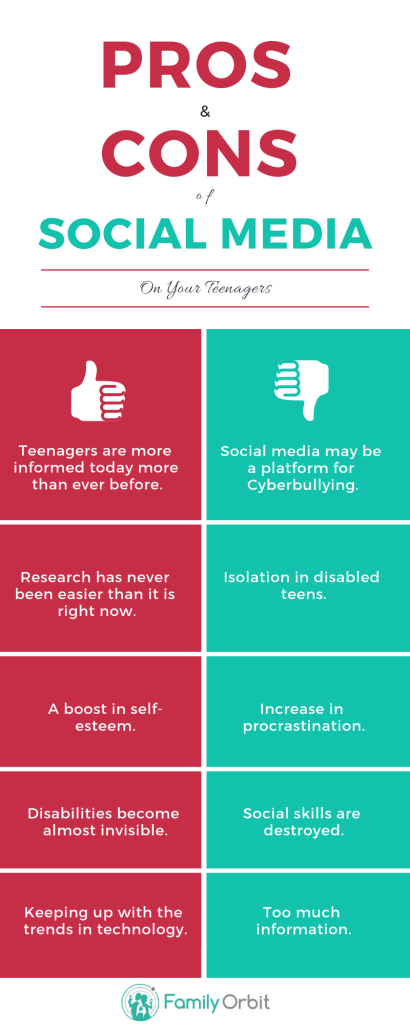
On the other hand, social media helps people who are socially isolated or shy connect with others. Surveys show that 25 percent of teens say they feel less shy, 28 percent feel more outgoing, and 20 percent feel more confident(53 percent of those identified as shy). https://socialnetworking.procon.org/
Teenagers who are “less socially adept” report that social media gives them a place to make friends and typically quiet students feel more comfortable being vocal through a social media platform in class. However, the cause of this is social media being a handicap for young people who would rather take the easy route instead of taking the chance on a real life experience. Furthermore, these teenagers are “shy” and “socially isolated” because they grew up with a piece of technology every day and they don’t know the difference between the two.
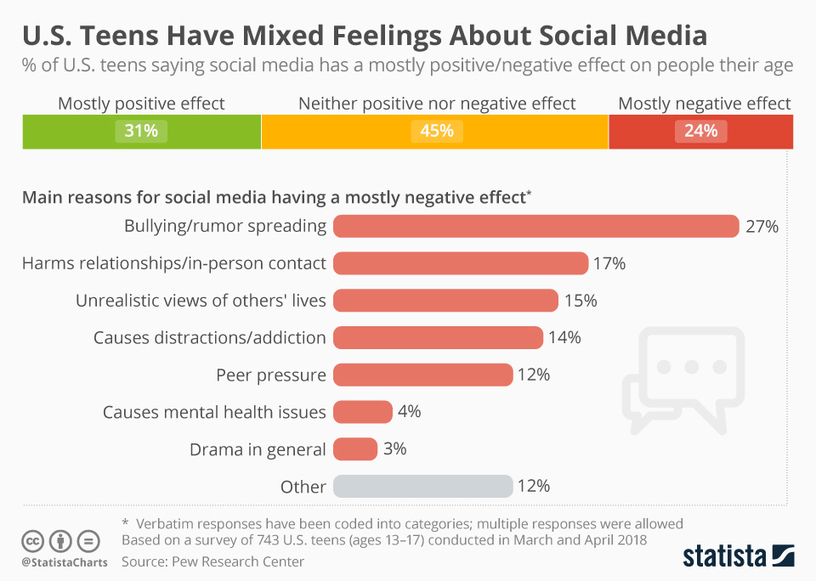
Another one of the most common themes related to technology use is comparisons. Teenagers on social media spend much of their time observing the lives and images of their peers. Therefore, this leads to constant comparisons. And this can damage self-esteem and body image. Moreover, it can lead to depression. One of the most evident examples is comparisons among teen girls.
According to a Pew Research Center report on the effect of social media on teenagers, “43 percent of teenagers say they feel pressure to only post content on social media that makes them look good to others. Furthermore, 26 percent of teens say these sites make them feel worse about their own life.” https://www.pewresearch.org/internet/2018/05/31/teens-social-media-technology-2018/
On the other hand, social media provides a forum for teen identity development. Allows teens to practice skills related to identity development. These include, self-preservation, self-disclosure, voicing opinions, beliefs, and preferences. However, these skills are not real experiences if it’s through a screen. Because these teens aren’t actually utilizing these skills to their true definitions.
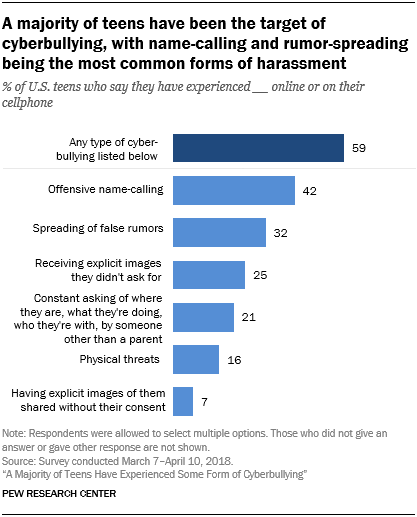
The high percentage of teenagers experiencing cyberbullying is a scary sight for our younger generation.
Bullying has long been an unpleasant and challenging aspect of adolescent life. But the rise of social media has transformed where, when and how bullying takes place. A new Pew Research Center survey finds that “59% of U.S. teens have personally experienced at least one of six types of abusive online behaviors.” Furthermore, middle school children who are victims of cyberbullying are almost twice as likely to attempt suicide.
Some people may argue that social media empowers individuals to make social change and do social good. An example of this is in Hillsborough, CA, where “freshman varsity soccer goalie Daniel Cui was blamed for and bullied about a losing season until over 100 of his teammates and classmates changed their Facebook profile photos to one of Cui making a save, silencing the bullies and building Cui’s confidence.” While this point may be true, plenty of evidence shows the outweighing negative effects of social media. Even within this story, bullying was the cause of the incident, further backing up the negative effect of social media on teenagers.
Social media is and will continue to be harmful to our teens, unless something is done about it. Effects such as teen depression, self-comparisons, cyberbullying, are just a few reasons to why social media negatively effects teenagers.
Byline
Luke Richardson, 16 year old sophomore, at Franklin Simpson High School. An avid social media user. Constantly experiencing and seeing the effects of social media on a day to day basis. Follow me Instagram @lukerichardson.3

I wake up to the annoying sound of the alarm clock yelling at me to get up. The flashing red numbers staring back at me. A wave of teenage boys flood the halls of the hotel. Wanting to be the first in line for breakfast. We scarf down plates of waffles and sausage before we head back to our rooms and rest before the biggest game of our lives.
We step out the sliding doors of the hotel into the surprisingly warm winter air. Cloudy skies shaded the city of Lexington, and a light rainfall showered over us. The breathtaking sight of Kroger Field flowed through me as I peered out the window of the bus. Pensive rap music drifted through my ears as I zeroed in on the game.
Arriving at the stadium, we were greeted by a wave of hometown fans. Showering us with love and praise. Getting ready, the tape vigorously grips my skin as it is being wrapped around my wrist. As I stare at the “Franklin-Simpson” printed across the chest of my jersey, I am constantly reminded of what we represent. Not just a game, not just a team, but a whole city. That same city who is waiting in the stands above us for their boys to run out onto the field. I throw my pads over my head and strap up.
There is not much of a pre-game speech needed to increase the hype. Coach knows we are focused and knows how ready and prepared we are for this game. This isn’t anything new for our seniority. This is just another game on another field. The mission is the same and our mindsets are the same. We have done nothing but pour our hearts out week in week out. We have endured the pain and tasted the glory. It is our time once again to achieve the title of champion.
As I walked through the tunnel with my team, we watched as the game before us ended. Watching the winning team celebrate, we knew we had to make that a reality for us. Running out onto the field, the scent of turf feels my lungs. The towering college lights smiled down on us and the eruption of applauds rained down us.
“Ahhhhh, BOOM!” The kick is off and the game is underway. A back and forth stalemate was the story of the game. Both defenses containing the most high-powered offenses in the state. Two game changing touchdowns from Tre Bass are what separated us. A tornado of emotions swept over everyone for 48 straight minutes. However, a game clenching stop by our defense calmed the storm and sealed us the victory.
A rush of happiness and relief rushed through my body as I took the final knee. All of the work and time put in had finally payed off. We were Champions! Even as the storm roared on, this was a memory the rain couldn’t wash away.
In the narrative “Big Boy”, David Sedaris expresses his tone towards an aspect of life through his use of powerful diction. In the story, Sedaris tells of an unexpected incident he encounters in a friend’s bathroom. The author’s tone toward this event is embarrassed and also annoyed. Sedaris’s first comment on the business left in the toilet was “the absolute biggest piece of work I have ever seen.” This quote expresses his annoyance with the major problem Sedaris knows he has to deal with. Sedaris’s first sign of embarrassment was when he said, ” My whereabouts were public knowledge.” The author is paranoid because he doesn’t want everyone to think that the business was left by him. Sedaris also says there was no way he was going to “take the rap” for the business left. This incident was way too embarrassing for Sedaris to own up to someone else’s problem.
As Sedaris continued to struggle, he constantly thought that it “wasn’t fair” and “not my job.” This exemplified Sedaris’s annoyance with his situation and how he was aggravated by cleaning up someone else’s mess. In the end when everything was settled, Sedaris began to “examine the suspects” because he was annoyed with everything he just had to go through for someone else’s mess.
In The Handmaid’s Tale, Margaret Atwood tells the story of the life of a handmaid in a totalitarian society, called Gilead. Due to environmental disasters and a plummeting birth rate, the rulers of Gilead treat women as property of the state. In their desperate attempt to repopulate their world, the handmaid’s are of highest value due to their fertility and are forced into sexual servitude. However, these women are stripped of most of all their power and live their life for Gilead. Throughout this story, Atwood reveals many themes. One theme that she greatly exemplifies, is the theme of power. In The Handmaid’s Tale, Margaret Atwood exemplifies the theme of power through the oppressive society of Gilead.
The theme of power is most considerably shown through government. Governments must force a certain amount of power and control on their people for their society to function properly. However, when the power and control become too extreme, it eliminates the freedoms and power of its people. In the novel, Offred says, “I want to keep on living, in any form. I resign my body freely, to the uses of others. They can do what they like with me. I am abject. I feel, for the first time, their true power.” (p.286) This quote shows how the government’s ultimate control and oppressive conditions have damaged and objectified these women to nothing. One of the most infamous people that come to mind dealing with oppressive power is Hitler. This quote exemplifies how Hitler deemed Jews and millions of others to be subhumans, similar to how Gilead deems the handmaid’s as nothing but having children. https://en.wikipedia.org/wiki/Racial_policy_of_Nazi_Germany

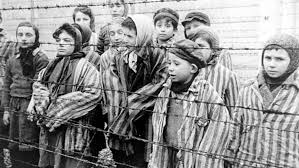
Also, Offred states, “where the tattoo is, a Braille he can read, a cattle brand. It means ownership.” (p.254) This implies that the tattoo is a symbol of the repressive, controlling nature of the totalitarian society Offred lives in. This shows the true power the government has over these women. Hitler also comes to mind with this quote. The matching striped clothing that comes to mind when you think of the Holocaust is a symbol of ownership and how the Germans objectified the Jews and others to nothing.
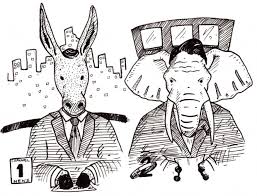
The theme of power is also shown through the media. In today’s society, media has the biggest influence on the world. Media is so powerful that it can easily influence someone positively or negatively in a matter of seconds. News is almost always biased to a certain peoples views on a certain topic. In the novel, Offred says, “They show us only victories, never defeats. Who wants bad news?” (p.83) This quote is an example of how the media can be biased. Gilead only wants to show all of its citizens the good news, so they will be influenced positively and unaware of the bad news. Just like in today’s society, media is constantly biased. Certain news stations only encourage their views and opinions and undermine anything against them. The most common topics that are biased are politics and sports. https://en.wikipedia.org/wiki/Media_bias_in_the_United_States
In the novel The Handmaid’s Tale, Margaret Atwood exemplifies the theme of power through the oppressive society of Gilead. Atwood most considerably shows this through government and media. This theme’s relevance to the novel is just as important as its relevance within today’s society. Both the novel and today’s society exemplify the true power of power.
“As far as I’m concerned, being any gender is a drag.” -Patti Smith
Through this quote, I believe Patti Smith says exactly what she means. No matter what gender you are, life is going to be difficult. Everyone is judged and stereotyped. All people are criticized and negatively affected in many ways. Another quote from Patti Smith explains this quote perfectly, “I felt alien my whole life, but I didn’t feel alien because of my gender. Other people made me aware of my gender.” This quote shows that gender isn’t the problem, people will make you feel alien no matter your gender.
Also, I believe Patti Smith means that people shouldn’t be worried about genders, rather focus on living life and being free. People are going to criticize no matter the circumstance, so you should just move on and live your life. A quote from Patti Smith portrays this fully, “Put down your cell phones, put everything away, and feel your blood pulsing in you, feel your creative impulse, feel your own spirit, your heart, your mind. Feel the joy of being alive and free.” This quote shows that you should block out all the nonsense; focus and experience all the genuine aspects of life.
“You educate a man; you educate a man. You educate a woman; you educate a generation.” This quote is extremely evident in today’s society. The importance of women in society is beyond debate. Women have proved that being “inferior” has nothing to do with their gender. The stereotypes of only being wives and mothers have ultimately become extinct. Women have influenced our world tremendously.
A woman has the power to make people listen to her. She has the will to share knowledge with others. As mothers, teachers, grandmothers, etc, women are the main facilitators of knowledge in our world today. Thus, when you educate women, you benefit everyone else. Basic education is key to a nation’s ability to develop and grow, and it is clear that the amount of female teachers across our nation is paramount to male teachers. Thus also showing the ultimate importance of educating women.
An educated woman is better able to educate her own children who, in turn, will get a better education themselves. This is a constant cycle that will continue to benefit future generations. Also, women’s importance in the workforce has greatly increased. Most companies today are highly aware supporting female leadership is a must in today’s work environment. Therefore, educating a woman does “educate a generation.”
Based on the quotes in the novel, what is Steinbeck’s perspective upon women?
In Of Mice and Men, Steinbeck tells of the lives of American workers during the Great Depression. A motif is any recurring element that has symbolic significance in a story. A motif that Steinbeck continuously implements throughout the story is the motif of women. Throughout history, sexism has been a controversial issue. In certain ways it is still present in today’s society. Steinbeck distinctly voices his opinion on women in many instances in the story. In the novel Of Mice and Men, Steinbeck exemplifies the motif of women through his characterization and use of stereotypes.
The embodiment of women is illustrated through Curley’s wife. She is the most prominent female character in the story. Despite her frequent appearance, she is nameless. She is referred to as “Curley’s wife” the entire time. A name means to have an identity and having importance. This explains Steinbeck’s view on women showing that they lack importance. In the story it says, “Did you see that girl? You mean Curley’s girl?”(p.55) The evidence appears to suggest that women are considered possessions.

Not only are women portrayed as possessions, they are also considered troublemakers and seductresses. When Lennie and George worked on a farm in Weed, they had to flee due to Lennie’s wrongdoing. A woman screamed and said Lennie was about to rape her. This attracted a mob to come kill Lennie because he grabbed her red dress. However, Lennie had no intentions with the woman, he was only attracted to her dress. As a result of her exaggerated reaction, Lennie received trouble for it. In the novel it says, “Well, the girl rabbits in an’ tells the law she been raped.” “He just scared her. I’d be scared too if he grabbed me. But he never hurt her. He jus’ wanted to touch that red dress.” (p.42) The available evidence shows that someone else received trouble for a woman’s wrongdoing. The story also says, “cause she’s a rattrap if I ever seen one.” (p.54) This evidence further illustrates that women cause traps and and cause trouble.
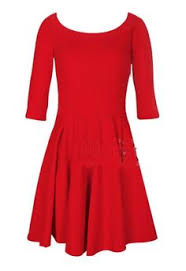
Women are also depicted as seductresses. Curley’s wife is the main example of this. In the beginning of the story, it says, “a cotton house dress and red mules, on the insteps of which were little bouquets of red ostrich feathers.” (p.31) The color red most likely connotes the idea of danger and love. This in turn meaning, her sexual attraction. Also in the story, Curley’s wife often stops by to talk to the men on the ranch. The story says, “she puts her hands behind her back and leans against the door frame so that her body is thrown forward.” (p.31) This shows that Curley’s wife always seems to attract all the men’s attention despite being married.

Further, based on the two incidents with Curley’s wife and the woman on the ranch in Weed, women are a negative influence on the main characters in this story. Due to Lennie’s disability, his child-like mind can’t understand the idea of sexual attraction, which in turn frightens the women. George often has to protect Lennie from women. In the story, it says, “Don’t you even take a look at that bitch. I don’t care what she says and what she does. I seen ’em poison before, but I never seen no piece of jail bait worse than her. You leave her be. (p.30) This evidence shows that George constantly warning Lennie about women suggests women are troublesome.
In the novel Of Mice and Men, Steinbeck exemplifies the motif of women through his characterization and use of stereotypes. Ultimately, Steinbeck’s portrayal of women is illustrated through female characters such as Curley’s wife and the woman from Weed. Steinbeck’s perspective on women is that they are possessions, they are troublesome, and they are distractions.
I am from Friday Night Lights
From cleats and uniforms
I am from the aroma of a house full of boys
stinky, sweaty, that mom somehow kept clean
I am from the woods behind my house,
making forts and airsoft wars
I’m from Sunday suppers at Granny’s and classic movie quotes
From Granny Peggy and Uncle Chris
I’m from the hard-workers and do-it-alls
From always try your best and be yourself
I’m from church in the morning and praying before supper at night
I’m from small town Franklin, Kentucky,
fried chicken, and sweet tea
From the two fingers my Pa lost in a machine,
the many books my Papa has wrote.
Familiar faces displayed throughout the house,
I am from these special moments captured throughout my life.

 Luke's Blog